Why game the library system?
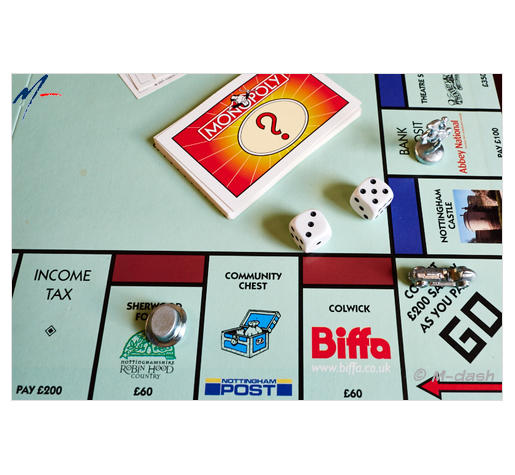
I have been reading comments on various stock photography forums and I am troubled, and relieved. Troubled that so many people who are trying to licence their images through libraries, especially crowd sourced, seem most focused on gaming their libraries' ranking systems.
On the other hand I am relieved because it means that it creates space for those of us who are working at optimising our photography to the needs of the market, needs of clients. Meeting the needs of our clients must, in the long run, be the best use of our time.
Optimising for a library or agency is putting the cart before the horse. Customers are not going to buy if we do not meet their needs. Simply getting images however inappropriate to appear at the front of searches harms both the photographer, the library and wastes potential clients' time.
If on the other hand we produce work that meets clients' needs, which includes correct keywords then we are half way to being successful. There is no future, as discussed here before in Taking Stock, in producing yet more, easy, generic pictures of popular landmarks. Ron Engh in Sell & Resell Your Photos back in the 1980s was steering freelance stock photographers from such obvious subjects if they wanted to be successful. It is even more true now, there are probably thousands of times as many images available from libraries than back in 1980.
If photographers feel it is necessary to optimise for a library's search engine to get images in front of a potential client it raises several questions:
- Are the photographers images so generic that there are hundreds of similar, better or at least equally competent, pictures of the subject? Why would a client use their picture rather than any of the hundreds or thousands of others?
- Are photographers being lazy and simply copying what they see in the libraries? It is a common complaint from magazine editors that they get sent articles, portfolios and the like on the same topic as one that they have just published. Why would they publish more of the same?
- Is the library of choice the right one for a particular photographers work? If the work is different perhaps they should be using a route to market that is more appropriate than a generic, pile it high and sell it cheap, library that takes anybody's work as long as it meets a basic 'quality' threshold. Is it because it is easy to get accepted and provides comfort to photographers that they are doing something that they expect will make them (easy) money.
- Are they applying as much effort into captions and keywords as to the photography? Accurate captions have always been needed but now keywords are probably more important, in many cases at least, as the image itself. In the online world good keywords are what makes a photography visible to clients; Images are now nearly always found by online searches rather than browsing catalogues or even online portfolios (unless you are a 'name' photographer).
I have been guilty of all of those in the past and have just taken a sabbatical to rid myself of such an approach. I am now totally focussed on optimising for the market and for myself rather than trying to work out what drives ranking in libraries' search results. Even where I have a low overall ranking I still appear high in search results where I offer something a bit different (and well described) and then make sales as a result. I am working on improving that and as a result I am enjoying my photography much more now I am not seeking out the easy, generic stock image. Ones which can only sell (occasionally) if I game the channel, which then backfires on everything else.
I no longer second guess my libraries, I just worry about what I can do that the market will want. Success only comes from effort, not taking the easy (lazy?) route of copying others, or trying to game the system. Those days are long gone.
Add new comment