Finding a new photographic vocation
Alamy changed its contract and that was the trigger I needed. I had effectively stopped being a stock photographer in 2015 and had hardly picked up a camera since. However, I have not lost my interest in photography; I started a PhD at University of Nottingham in the 2018-19 academic year. Broadly my research question is to explore the impact of the Internet and Worldwide Web on the practice of photographers producing extended bodies of work.
Initially I was thinking in terms of researching photojournalistic work but as I started to understand the field and the place of my research I broadened out beyond specific genres while narrowing the context to bodies of work. What I mean by a body of work might be called a photo story or photo series on a theme undertaken over an extended period; it is not a set of images of a single event. As I started exploring secondary sources and talking to photographers it became clear that the bodies of work which interested me were those that mattered to the photographer. Many are subjects that the working photographers undertake without financial aims but because, as Dr Pete Davis said to me, the subject matters to the photographer; there is vocational drive to the work. Indeed, in some cases it becomes an obsession with significant financial, family and health consequences, such as for W Eugene Smith and his 'Pittsburgh' project.
Many projects, such as Susan Meiselas's work with the besieged in Kurdistan She has returned many times because the people and the social consequences matter to her, not simply because it is a journalistic assignment. As with several of her bodies of work they may have started as journalistic assignments but with a significant vocational element.
Other bodies of work appear to be for amusement, diversions from the day job. Two that spring to mind are 'Elliott Erwitt's Dogs'[i] and Jane Bown's 'Cats'[ii]; both were shot opportunistically, in Bown's case often on the way to and from assignments and published almost a decade after her death. A similar low-key body of work is Andre Kertész's well known 'On Reading'[iii] which was shot on ad hoc basis over more than fifty years, simply because the subject interested him.
All that is to set the scene for my next steps. I have long argued that generic stock photography was losing its viability as a source of income[iv] and, for me at least, it no longer offers sufficient income, enough interest or have a purpose that motivates me to continue with work of that nature. However, the work I enjoy studying are those bodies of work, the vocational work of practicing photographers, the work they do primarily for their own satisfaction or because they care about the subject; even out opf concern or as a philosophical exploration of a subject.
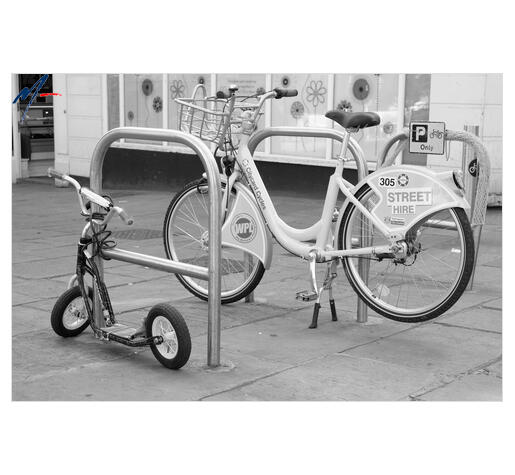
I already had a couple of themes that had not quite coalesced into projects; like Kertész I found I was building a themed set of images whenever the opportunity arose. I had started to think of them as potential projects, but I was still on my photography sabbatical. The recent changes to Alamy's contract causing me to leave was the push I needed to get back to my photography, without feeling that I should be working, shooting stock for submission to Alamy. I am now guilt-free and can shoot for my own satisfaction and interest, on subjects that interest or concern me. At this stage I already have an embryonic collection of photographs on 'Bicycles' and another occasional project which is an exploration of photography. They are for amusement or perhaps as philosophic explorations. However, I also have an idea for a body of work on 'Gaia theory and climate change' that needs a bit of development; it is subject of concern to me for the future wellbeing of our children and recent grandchild. My photography is rediscovering its purpose.
This then brings me back to my doctorial research. I have the desire and motivation to produce bodies of work on subjects that interest me. I do not need to worry whether I can make an income from them. I will get my satisfaction from the work itself. However, my research is also looking at how the Internet and WWW has changed photographer's practice. In particular, how the more egalitarian publishing opportunities of new technology enables them to reach an audience. Although the work may not be driven by monetary motives an artist or communicator needs an audience. I believe the Internet and WWW provides a way to reach interested viewers even if they are a very niche audience. At this stage I do not know what I will do with the photographs from my new photographic work, hopefully by the time I have a significant body of work my research will have given me some insights into reaching a potential audience.
In the meantime, I will treat it as a pleasant diversion from my scholarly work, at this stage it only has to please me. It will me get back to exercise as the family say 'I will be taking my camera for a walk' on a frequent basis; something I have not done for several years. I do not claim it will be important and will change the world; if it changes me that will be enough. Any other positive impact will be a pleasant bonus.
It means I will now start carrying a camera whenever I am out and about, often just a digital zoom compact. The subject matter is key, and I will even use a smartphone if that is all I have with me. I will not be precious about the technology I use if it is good enough for the subject of the moment. I will not have a photo library quality control team telling me what is acceptable and what is not. If it does the job for me then that is good enough. In that respect I rather like a quote from Susan Meiselas what lens she uses: "It's not what lens you use, it's what lens you think you are."[v]
Broadly, that will be my approach to photography going forward; it will be what the photographs and the work says that matters not the technology. I will think about what to do with the results in due course. In the meantime, I will share my progress as and when there is something to say. I hope those of you who have also changed tack as a result of the state of stock photography can find your photographic vocations.
References
[i] Elliott Erwitt and Peter Mayle, eds., Elliott Erwitt’s Dogs (Kempen: teNeues, 2008).
[ii] Jane Bown and Robin Christian, Cats, 2016.
[iii] André Kertész, On Reading, 1st Norton ed (New York: W.W. Norton & Co, 2008).
[iv] ‘Taking Stock | M-Dash—Passion for Purposeful Photography’, accessed 14 June 2021, https://m-dash.com/taking-stock.
[v] ‘Susan Meiselas: “I Am Directed by Where I Want to Go, Where I Want to Stay, Where I Want to Go Back To”’, accessed 13 May 2021, http://www.theartnewspaper.com/interview/susan-meiselas-i-am-directed-by....

Comments
"side projects"
Thought-provoking, Martin.
I think the the "big names" don't really worry too much about side projects away from their assignments. The likes of Erwitt, Parr, McCurry and Meiselas know that no matter how seemingly frivolous the subject, there'll always be a gallery exhibition or a Taschen coffee table book in it for them.
Good luck with the doctoral studies; you certainly have a rich seam of work to mine. Good luck with your new found photographic impetus too.
Russell
Perhaps, but ...
I have thought a lot about 'star' photographer's knowing their side projects will find an outlet and I am not sure it is entirely true as a motivation. Many of the side projects likes Erwitt's dogs and Bown's cats predate their celebrity as did 'On Reading'. There are examples where the project became an obsession, perhaps the most notable being W Eugene Smith's 'Pittsburg' and even perhaps his 'Minimata', at the expense of almost every thingelse; there are other less extreme examples.
Of course, once photographers achieve a certain degree of celebrity that what you say is true. We will have to see, my research will probably be concerned with less well known photographers. After all there are not that many (compared with the total) who achieve the standing of an Erwitt, McCullin, Bown or Meiselas who will automatically find a publisher or exhibitor for any body of work. It is why I am finding my research so interesting.
Regards
Martin
Interesting read Martin..
Interesting read Martin...Thanks.
I think any serious photographer will have themes that they will return to over the course of their life and that is something that can make an interesting collection eventually.
There is also the type of project which involves a time(could be long or short), spent investigating a particular idea, looking for ways to express a viewpoint or to collect a series that explains/informs about a cultural phenomenom for instance.
These types of approach are also something that I'm finding more appealing as a more satisfying way to work as opposed to just looking to generate photos for the stock monster, or, chasing commissions(though I still do this!).
I'm now spending more time submitting projects to festivals, exhibitions and magazines(mainly online), with varied success, but it's definitely the way I would like to continue with my photography.
Alongside this I'm looking for ways to share my knowledge with other photographers specifically by offering guided trips exploring Tenerife(where I live), and am also looking for online outlets for this.
I look forward to reading more about your studies and the projects you produce.
Good luck.