Starting doctoral research
As I have said in previous posts I have been developing a scholarly interest in the history and philosophy of photography. Initially it was just a casual interest but it has developed into a real passion with the desire to go deeper and with more scholarly rigour. I have now embarked on formal academic research into aspects of long-form photographic projects, the photo story or series and its cultural implications.
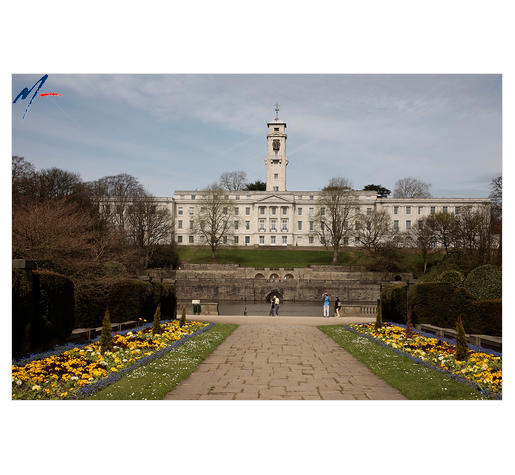
In November 2017 I chanced, at the last minute, on a notice about an Arts and Humanities Open Day for would-be postgraduate studies at the University of Nottingham, my very local university. I spent the afternoon there and by the end of the day I had established that it would be possible for me to apply to do research for a Doctor of Philosophy (PhD) degree with a good chance of acceptance.
I have long had the ambition to do doctoral research however a busy, and rewarding, professional career with family commitments meant I kept it on the backburner for another time. But now I was retired this was a new opportunity, probably my last chance to fulfil that ambition. It should be appreciated that it was the intellectual challenge rather than any career purpose that drove that dream, so age and retirement did not undermine the idea, in fact in many ways it took off the pressure that younger candidates feel as they pursue a PhD to further an academic career.
My concern was that with only a 2.2 Honours degree and no Masters degree I would not be considered sufficiently qualified to be accepted onto the course. Also my first degree is in Mathematics and Physics and I had had a career in computing and management consulting so I was concerned that my lack of background academic knowledge in my chosen field would be an obstacle to doing research in a field of study that was new to me: cultural and visual studies, the photo story in particular.
The people at the Open Day, especially the Director of Postgraduate Studies for the School of Culture, Language and Area Studies (CLAS) were very supportive of the idea that I should apply and I would probably be accepted.
Over the following few weeks I put together a research proposal and the School found me supervisors who were interested in overseeing my research. After a relaxed conversation, it could hardly be called an interview, with one of my potential supervisors who encouraged me to formalise my application and that he would be able to support it. A few weeks later it had completed its bureaucratic journey and I had an unconditional offer of a place to start my formal studies on 1 October 2018.
It was only after I started that I discovered most of my new PhD colleagues, most from recently completed Masters' courses in their research field, had taken six months or more to prepare their research proposal and application—I had taken less than six weeks.
Consequently it is not surprising that it has taken me my first six months to refine my research question as I have developed my understanding of my new area of interest and the scholarly approach. Initially I was trying to read across the whole field but my supervisors advised me to "slow down, relax and enjoy it"; I suspect they were worried I would burn myself out with my intensity—a PhD is a marathon not a sprint. Without saying so explicitly they steered me to read out from the key questions underlying my research rather than reading inwards across the whole field of loosely related knowledge, which would be an impossible task. Indeed a professor friend (from a different field) told me that in reality most PhDs hinge on a handful of key references even if the literature review goes wider to validate the originality of the PhD and to place it in a broader context. This new approach has come together and feels as though it is working well.
This change of lifestyle has been totally positive. It has given me the intellectual challenge I have been missing since I retired from my business career. It has also put me in an intellectual milieu where discussing esoteric aspects of knowledge is normal, something that is not nerdish. Or, if it is, nobody is bothered by the soubriquet. It should be noted we are still normal human being (well mostly) and we also discuss trivial, every day stuff. As result this has worked wonders on my mental health and mood and as I walk to or from the University (2.5miles) it is also good for the body. The University Park campus is large so I walk at least four miles a day, it will be even more in the spring and summer when I will walk the two and a half miles each way.
So a new beginning but my own photography is still in the doldrums. Indeed my studies have caused me to challenge the underlying nature of photography in a culturally diverse world. It has made me question the purpose of my photography and my relations with its subjects. I will have more to say on this topic in due course.
So, my intention is to use M-dash to share relevant parts of my research and the ideas it generates. It will be written for a general audience that has an interest in the broad cultural roles of photography. I spent my career presenting specialist knowledge to non-specialists in ways that allowed them to take informed decisions; I see my role here as much the same. Public engagement is an increasingly important part of academic research these days and I have already made a public presentation in collaboration with Lakeside Arts' exhibition, Harold Gilman, Beyond Camden Town at the end of January.
As I will be reading widely I will also be reviewing some of the books that I feel may be of interest to readers here. Please feel free to engage, preferably through thoughtful comments, or via email on any topics I raise going forward. If there is interest I will also be looking to create a forum in which a wider community discussion can take place. I will seek feedback on the matter in due course.
Add new comment