Getting Serious with Fuji
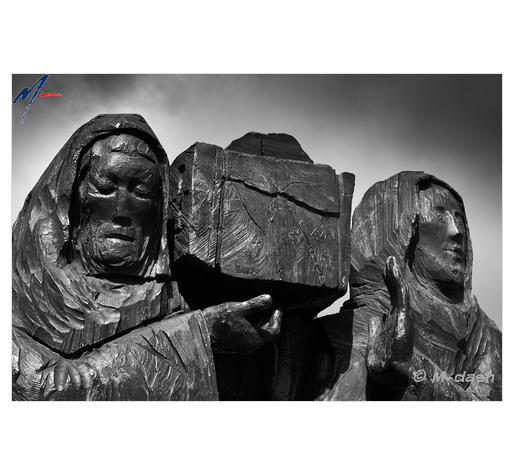
I established that the Fuji X series would meet most of my photography needs in my last post on the subject (First year with a Fuji X system). I was at the point where I needed to start using it seriously to understand what the Fuji system could do.
I had bought the Fuji X-T1, its add-on grip and the 10-24mm (15-36mm 135 equivalent) f4 zoom lens which filled in the gaps and gave me comprehensive coverage for general photography. At the time my photography was mostly stock especially travel and local subjects. However as I have said elsewhere I was getting disillusioned with general stock's viability as a business proposition.
Using Fuji for news photography
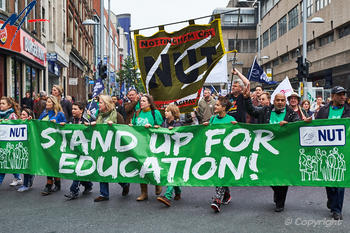 As a result I had started shooting soft news in and around my home town of Nottingham. The Fuji X-E1 had proved marginal with regard to autofocus speed, especially in poorer light. The X-T1 was a major improvement and I was able to get pictures from it used by The Guardian newspaper and others. For sport I still had to use my Canon 1Ds3 outfit and I had motorsport pictures used in The Independent, Der Bild, Der Spiegel and Italian newspapers. I was using Demotix as my news agency but got increasingly frustrated by the very low fees, pennies in some cases, and other issues; I gave up on them as it was not worth the effort.
But the discipline and the need to work quickly did prove that the Fuji X-T1 was up to the job of serious photography and could produce results acceptable to high-end publications straight out of the camera (ooc). The ooc jpeg files are as excellent as other users have reported although I can usually get better results from raw files, particularly in high-contrast lighting. That may be as much due to the way I have the camera parameters set, I usually shoot raw for preference. For news I shoot both jpg and raw to give me options. In one case I had to reprocess a raw file in camera when I had made a mistake with exposure on a key shot. The combination of shooting both raw and jpg plus the Fuji capability to process, with adjustments, raw files to jpg in camera rescued a mistake on part.
Battery grip
I only used the add-on grip for the X-T1 very briefly. I bought it mainly in the hope that I would be able to use a hand strap as I have always done with my Canons. It was possible to fit one but the top strap lug was too far forward and made it uncomfortable to reach the shutter so I abandoned that idea. The built-in grip with the shutter release needs to be extended further forward, as it is on many other cameras (perhaps on the X-T2?). I did not find the battery grip added much to the handling even with the long 55-200mm lens. That said my hands are pretty much medium in size (ML glove), those with larger hands might find it helpful. I have kept the grip to see whether I will need to use it with the heavier 50-100mm f2.8 lens and especially the planned 100-400mm. The other downside of the battery grip is that while it takes an extra battery, you need to take the grip off to change or charge the battery in the body itself.
By the time the Nottingham Festival of Words came round I had added the 18-135mm as my everyday, go everywhere lens. I covered almost all the events of the Festival week and I was pushing the high ISO capability to the limit and getting better results than I would have done with my full-frame Canon. Many of the events were in very low lighting so as well the ISO capability I was constantly challenging the image stabilisation (OIS). I often ended up using such ridiculously low shutter speeds that I was struggling with too much motion blur from my subjects. It is not as though authors and poets doing readings are the most active subjects, mainly gestures and odd toss of the head.
The other advantage the Fuji gave me at the Festival was that it is such a quiet camera. I was frequently only a few feet away from poets or authors doing readings and they were unperturbed by the camera noise. When I spoke to them afterwards they acknowledged they had heard soft click but it had not disturbed them. At one event I had to use flash so had to go back to my Canon, but I winced every time I pressed the shutter, the noise seemed deafening and I got glares, and worse, from the audience.
I try to avoid using on camera or frontal flash, I do not like the results. After the experience of using my Canon in a quiet venue I did some experiments and managed to use a Canon 270EX Speedlite on my Fuji X-T1. It was awkward but allowed me to get results where otherwise I would have struggled. I will buy a Fuji X compatible flash in due course for those occasional needs.
New capabilities from firmware updates
That highlights yet another positive aspect of Fujifilm's approach. They frequently update the firmware for their cameras, even in some cases, for discontinued models. My Fuji X-T1 has had major additional functions added through several firmware releases. One was an electronic shutter so I can now make my camera totally silent and I have a shutter speed up to 1/32,000 of a second. As well as that there have been improvements to autofocus with new modes and new film simulations for ooc jpg image files.
So far Fuji has been much more open with their future plans for the X system. They have not disclosed the new camera release timetable but they do publish a roadmap for proposed new lenses. It showed their plans for next two years or so and gave me confidence that I was not going to get left with an incomplete system. As time has gone on they have added additional lenses to the roadmap, especially the fast 90mm f2, 16-55mm and 50-140mm f2.8 zooms along the way. At the end of 2015 the lens roadmap is almost complete so it will be interesting to see if there will be a new lens roadmap once they launch the 100-400mm, probably early in 2016. At the time of writing that will only leave the 120mm macro lens on the roadmap for later in 2016.
Conclusion
The Fuji X system will do at least 95% of what I, or indeed most photographers, need. Yes, I would like faster autofocus but for the moment I still have my Canon system when it is needed. For everything but serious sport the Fuji is just about fast enough and hopefully will be even better when I add the new fast zooms to my armoury. I hope, indeed expect, the next generation of Fuji X cameras (X-Pro2 and X-T2?) sometime in 2016 will close the gap significantly on the traditional DSLR.
It is said that the best camera is the one you have with you. Invariably for me that is now the Fuji X-T1 and the 18-135mm (28-200mm 135 equivalent) lens. I take it with me whenever I go out, it fits in a small shoulder bag and I don't notice the weight. That is something I would never have done with the full-frame professional Canon, far too bulky and heavy. At this point in my Fuji story I add the 10-24mm or the 55-200mm for more serious photographic expeditions It just depends on the likely subjects.
What comes next?
As I said I had become disillusioned with both generic stock and the performance of the agencies I was using for news. So in the Spring of 2015 I decided to take a sabbatical, to shoot for myself without worrying about whether I could make money from it. Amongst other things I shot my personal project, 65x65 to try and rediscover my photographic mojo and hopefully a personal style. That will be the subject of future articles on both the equipment choices and the personal photographic journey.
Add new comment